
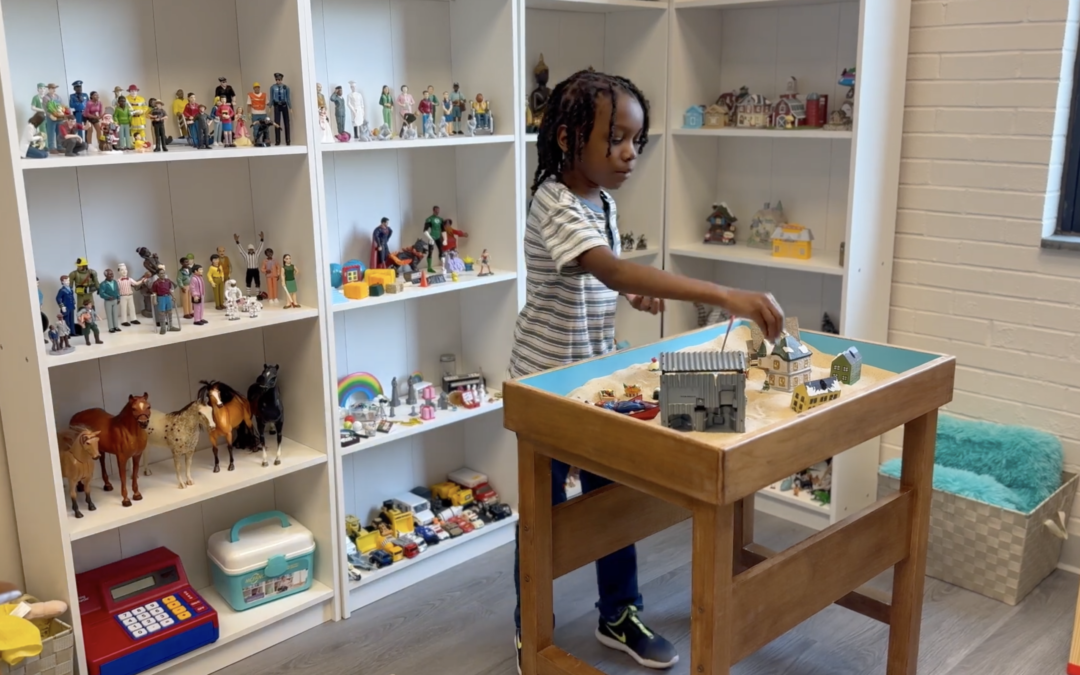
When a child is facing a serious illness, the emotional impact can be just as significant as the medical one. Hospital visits, procedures, uncertainty, and changes to everyday life can feel overwhelming — for the child and the entire family.
At Mitchell’s House, our counselors often use play therapy to help children express emotions, process difficult experiences, and build resilience both during their medical journey and beyond.
What exactly is play therapy? And how can playing with toys help a child cope with something as serious as a long-term or life-threatening illness?
Let’s take a closer look.
Play is a Child’s Natural Language
Adults tend to talk through problems. Children communicate through play.
When a child is building with blocks, acting out stories with dolls, drawing pictures, or playing in a sand tray, they are often expressing thoughts and feelings they may not have the words for yet.
For children navigating medical treatment, this can be especially important. They may be experiencing:
- Fear about procedures or hospital visits
- Confusion about their diagnosis
- Anger or sadness about changes in their life
- Worry about their parents or siblings
Play therapy provides a safe, developmentally appropriate way for children to express and process these emotions.
What Play Therapy Actually Looks Like
Play therapy may look simple from the outside, but it is actually a powerful tool to support children navigating challenging emotions and experiences.
During sessions, children might:
- Use medical play to act out hospital experiences with toy medical kits
- Tell stories using dolls, puppets, or action figures
- Create artwork that reflects how they feel
- Play in a sand tray, building scenes that represent their inner world
- Practice coping skills through games and creative activities
Through these activities, therapists can gently help children:
- Name and understand their feelings
- Reduce anxiety around medical experiences
- Develop healthy coping strategies
- Regain a sense of control during a time that may feel unpredictable
How Play Therapy Helps Children Facing Illness
For medically complex children, so much of life can feel out of their control.
Play therapy can help alleviate those feelings by giving them a sense of choice and agency.
Research and clinical experience show that play can help children:
- Build resilience during medical treatment
- Process traumatic or frightening experiences
- Reduce anxiety and stress
- Feel more prepared for medical procedures
- Stay more engaged in treatment and recovery
In many cases, play therapy also helps children feel seen and understood, even when their feelings are complicated.
What Parents Often Notice
Parents frequently tell us they see meaningful changes after their child begins play therapy, such as:
- Fewer fears about medical appointments
- Better emotional expression
- Improved sleep or reduced anxiety
- More confidence and resilience
Sometimes the changes are subtle. A child may start telling a new story, drawing pictures about their experiences, or asking questions they hadn’t voiced before.
Those moments can be powerful steps toward healing.
A Safe Space to Be a Kid
Children facing serious illness carry a heavy burden. But they are still children — and they need space to imagine, explore, laugh, and play.
Play therapy creates an opportunity for kids to be themselves, even in the midst of a challenging medical journey.
If you’d like to learn more about the counseling services offered at Mitchell’s House or explore whether therapy could support your family, we invite you to submit an application for services here, or reach out to our team at info@mitchellshouse.org.